
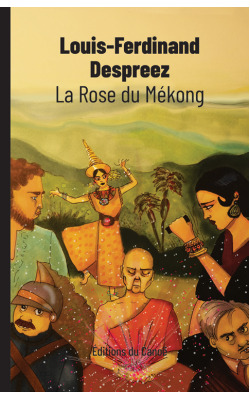
Louis-Ferdinand Despreez
La Rose du MékongThe Rose of the Mekong380 pages. May 2025. Word rights available
FICTION
HISTORICAL NOVELS
Avec La Rose du Mékong, Louis-Ferdinand Despreez nous plonge à nouveau dans l’Indochine des années 30. On retrouve les colons français de la cité royale de Luang Prabang présents dans son précédent roman Bamboo Song, mais associés aux nouveaux personnages d’une enquête et d’une course poursuite dans la jungle, dans les ruelles de Cholon et dans les pagodes du royaume lao. Fondé sur des faits divers qui ont défrayé la chronique de l’époque, il redonne vie à une société de colons, de marchands d’esclaves cruels comme cet Hubert Garlaban, dragon démobilisé de la guerre 14-18, arrivé à Saigon en 1919 pour faire fortune, de policiers de la Sûreté fédérale, de receleurs milliardaires, de barons chinois et de mandarins assassins. Depuis les mines de rubis de Mogok en Birmanie jusqu’au Laos – le pays du Million d’éléphants et du Parasol blanc –, dans un univers d’apsaras langoureuses et de dragons gardiens du royaume, il nous entraîne avec son bonze détective en robe safran, Phra Somsak qui erre sur la Route Coloniale 13 de la Chine au Cambodge, ne prend jamais de notes mais résout les énigmes en rêvant… sur les traces de ce rubis couleur de sang qu’on appelle « La Rose du Mékong ».
Dans une langue rappelant celle des romans naturalistes, il mêle ici une enquête policière à des portraits insolites de l’histoire du monde sur fond de colonialisme, de traite des « Jaunes » et des mystères de l’Orient. Un vrai roman populaire qui nous restitue une époque et le Mékong, majestueux et sauvage.
Romancier sud-africain, engagé aux côtés de l’ANC de Nelson Mandela, Louis-Ferdinand Despreez a été conseiller de plusieurs chefs d’État africains. Depuis sa résidence de Pretoria, il a parcouru pendant trois décennies le continent africain dans le cadre de ses missions. Il vit désormais sur un bateau dans l’océan Indien et le Pacifique et se consacre à l’écriture. Il a publié La Mémoire courte en 2006, Le Noir qui marche à pied en 2008 (Phébus), La Toubabesse (La Différence, 2016) et Bamboo Song (Canoë, 2021).
With La Rose du Mékong, Louis-Ferdinand Despreez once again immerses us in 1930s Indochina. We encounter the French colonists of the royal city of Luang Prabang from his previous novel Bamboo Song, now joined by new characters in an investigation and a jungle chase that leads through the alleyways of Cholon and the pagodas of the Lao kingdom.
Based on news events that made headlines at the time, the novel brings back to life a colonial society of settlers and slave traders as cruel as Hubert Garlaban—a former dragoon of the First World War, demobilized and arrived in Saigon in 1919 to seek his fortune—alongside officers of the Federal Security police, billionaire fences, Chinese barons, and murderous mandarins. From the ruby mines of Mogok in Burma to Laos—the Land of a Million Elephants and the White Parasol—within a world of languorous apsaras and dragons guarding the kingdom, he draws us along with his saffron-robed bonze-detective, Phra Somsak, who wanders along Colonial Route 13 from China to Cambodia, never takes notes, yet solves enigmas by dreaming… in pursuit of that blood-red ruby known as “The Rose of the Mekong.”
In a language reminiscent of naturalist novels, he weaves together a detective story with striking portraits drawn from world history, set against a backdrop of colonialism, the trafficking of “Yellow” peoples, and the mysteries of the Orient. A true popular novel that vividly restores an era and the Mekong—majestic and untamed.
A South African novelist engaged alongside the ANC of Nelson Mandela, Louis-Ferdinand Despreez has served as advisor to several African heads of state. From his residence in Pretoria, he traveled the African continent for three decades in the course of his missions. He now lives aboard a boat on the Indian and Pacific Oceans and devotes himself to writing. He has published La Mémoire courte (2006), Le Noir qui marche à pied (2008, Phébus), La Toubabesse (La Différence, 2016), and Bamboo Song (Canoë, 2021).