
Lakis Proguidis
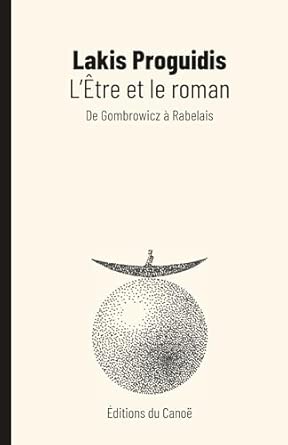
L'Être et le romanBeing and the NovelDe Gombrowicz à RabelaisFrom Gombrowicz to RabelaisESSAY
LITTERATURE
L’Être et le roman est le deuxième essai d’une trilogie autour de Rabelais. L’auteur y examine « le corps romanesque » – le corps qui devient une catégorie esthétique dans l’art du roman. Que signifie « le corps romanesque » ? Un corps collectif constitué d’êtres fictifs que sont les personnages qui commencent à peupler l’imaginaire européen à partir du XVIe siècle. Quelle nécessité psychique, spirituelle, civisationnelle a présidé à l’émergence de ce corps dans notre imaginaire ? Proguidis y voit une dimension de l’être humain que n’avait saisi aucune des branches du savoir constitué (théologie, philosophie, sociologie, anthropologie). Il s’agit donc de la naissance d’un art à part entière. Tous les éléments propres à l’esthétique de cet art sont déjà en oeuvre dans les quatre livres de Rabelais. Il les met en évidence par l’intermédiaire d’un dialogue avec un écrivain contemporain – dans le présent essai Witold Gombrowicz. Ce dialogue permet de saisir l’informulé d’une époque par des cheminements inattendus qui passent de la lecture attentive de textes, d’Homère à la presse, de l’expérience personnelle à la réflexion philosophique, de rêves aux hasards saisissants.
Lakis Proguidis est un essayiste français d’origine grecque. Son travail d’écrivain s’est centré sur l’esthétique du roman. Il a consacré, sous la direction de Milan Kundera, une thèse à Papadiamantis et Boccace (Les Belles Lettres). On lui doit par ailleurs, chez Gallimard, Un écrivain malgré la critique : essai sur l’oeuvre de Witold Gombrowicz. Parallèlement, il dirige L’Atelier du roman, revue trimestrielle qu’il a fondée en 1993.
Being and the Novel is the second essay in a trilogy devoted to Rabelais. Here, the author examines the “novelistic body” - the body that becomes an aesthetic category in the art of the novel. What does “the novelistic body” mean? A collective body made up of fictional beings, the characters who begin to populate the European imagination from the sixteenth century onward. What psychic, spiritual, and civilizational necessity presided over the emergence of this body in our imagination? Proguidis discerns in it a dimension of the human being that none of the established branches of knowledge (theology, philosophy, sociology, anthropology) had grasped. What is at stake, then, is the birth of an art in its own right. All the elements specific to the aesthetics of this art are already at work in Rabelais’s four books. Proguidis brings them to light through a dialogue with a contemporary writer - in the present essay, Witold Gombrowicz. This dialogue makes it possible to apprehend the unformulated aspects of an era through unexpected paths that move from close readings of texts, from Homer to the press, from personal experience to philosophical reflection, and from dreams to striking coincidences.
Lakis Proguidis is a French essayist of Greek origin. His work as a writer has focused on the aesthetics of the novel. Under the supervision of Milan Kundera, he devoted his doctoral thesis to Papadiamantis and Boccaccio (Les Belles Lettres). He is also the author, published by Gallimard, of Un écrivain malgré la critique: essai sur l’œuvre de Witold Gombrowicz. In parallel, he edits L’Atelier du roman, a quarterly journal he founded in 1993.