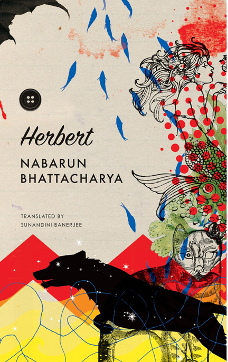
Nabarun Bhattacharya
HerbertHerbert166 pages | 29 - 000 words. Originally published in Bengali as Harbart by Deys Publishers - 1994. Published in English translation in 2019 (North America (New Directions)) - published in French (Editions Banyan - 2020). All other language rights available.
The India list
FICTION
Mai 1992. En Russie, Boris Eltsine agite le spectre du capitalisme à des millions de Soviétiques. La Yougoslavie se désintègre. L’Allemagne réunifiée s’interroge sur son avenir et le communisme s’effondre tout autour.
Pendant ce temps, dans les « bidonvilles des vachers » du vieux Calcutta, Herbert Sarkar, propriétaire d’une entreprise qui « dialogue avec les morts », décide de rendre l’âme. Il abandonne sa tante et son oncle, ses amis et ses ennemis, son penchant pour les cerfs-volants, son cœur brisé pour sa voisine Buki, le pigeonnier d’où il contemplait le ciel, son Ulster noir aux boutons gros comme des médailles, son cahier rempli de poèmes, ses promenades du soir sur Park Street, le souvenir d’une jeune fille russe courant sur le sol noir face aux soldats allemands, et même sa fée. Sa fée qui, battant des ailes contre la fenêtre, irradiait sa chambre de lumière bleutée…
Légendaire, satirique et cinglant, sauvagement énergique, profondément tendre, Herbert est un chef-d’œuvre de la littérature indienne.
Nabarun Bhattacharya (1948-2014) est né dans une famille d'écrivains, de cinéastes, d'artistes et d'universitaires. Journaliste de 1973 à 1991 dans une agence de presse étrangère, il abandonne cette carrière pour devenir écrivain à plein temps. Herbert a été publié en 1992 et a remporté les prix Bankim et Sahitya Akademi. Parmi ses œuvres les plus connues figurent Kangal Malshat (2003), Ei Mrityu Upotyoka Aamaar Desh Na (2004) et Phyataroor Bombachak (2004). Romancier et nouvelliste, il fut également un poète prolifique et, de 2003 à sa mort, rédacteur en chef de la revue Bhashabandhan.
May 1992. In Russia, Boris Yeltsin is showing millions of communists the spectre of capitalism. Yugoslavia is disintegrating. United Germany is uncertain about their next move, and communism is collapsing all around. And in a corner of old Calcutta, Herbert Sarkar, sole proprietor of a company that delivers messages from the dead, decides to give up the ghost. Decides to give up his aunt and uncle, his friends and foes, his fondness for kites, his aching heart that broke for Buki, his top terrace from where he stared up at the sky, his Ulster overcoat with buttons like big black medals, his notebook full of poems, his Park Street every evening when the sun goes down, his memory of a Russian girl running across the great black earth as the soldiers lift their guns and get ready to fire, his fairy who beat her wings against his window and filled his room with blue light .
Surreal, haunting, painful, beautiful, and astonishing in turn, and sweeping us along from Herbert’s early orphan years to the tumultuous Naxalite times of the 1970s to the explosive events after his death, Bhattacharya’s ground-breaking novel is now available in a daring new translation and holds up before us both a fascinating character and a plaintive city.
Nabarun Bhattacharya (1948–2014) was born into a family of writers, filmmakers, artists, and academics. A journalist from 1973 to 1991 at a foreign news agency, he gave up that career to become a full-time writer. Herbert was published in 1992 and won the Bankim and Sahitya Akademi awards. Some of his best-known works are Kangal Malshat (2003), Ei Mrityu Upotyoka Aamaar Desh Na (2004) and Phyataroor Bombachak (2004). Novelist and short-story writer, he was also a prolific poet and, from 2003 until his death, editor of the Bhashabandhan journal.
PDF of English translation available
‘Bhattacharya’s book is not primarily about the individual, that obsession of the Western liberal novel. It is about relationships: between the individual and the scattered collective, between revolution and the afterlife, between cockroaches and fairies. And it is always about language, its felicities and its inadequacies, its limitations, and its pliability. Translated with brio into English by Sunandini Banerjee, Bhattacharya’s voice is wholly original: lyrical, melancholic, comic, and bracingly obscene.’— Siddhartha Deb, The Paris Review