Nabarun Bhattacharya
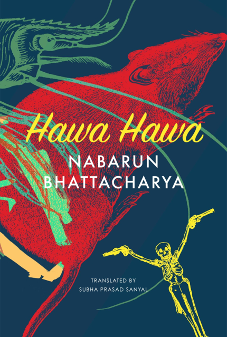
Hawa HawaHawa Hawa139 pages | 38 - 500 words. The stories collected in this book were originally published in Bengali by Protikkhon in 1995 as part of the volume Nabarun Bhattacharya - Chhotogolpo. Published in English translation in 2022. All language rights available except - Bengali and English
The India list
FICTION
SHORT STORIES
Un recueil de nouvelles inventives et surprenantes de l'un des écrivains à contre-courant les plus en vue de l'Inde.
Dans ce recueil très inventif de nouvelles de Nabarun Bhattacharya, nous rencontrons des personnages tels qu'un flic à la gâchette facile dans un État policier autoritaire, un pendu, un révolutionnaire à la retraite gagné par la folie des grandeurs, et des personnes travaillant pour une société qui organise des suicides somptueux moyennant un certain prix. Satires cinglantes de la société ou enquêtes surréalistes sur la violence et l'amour, ces récits sont aussi une fenêtre sur le climat politique et social du Bengale, retraçant à la fois les évolutions pan-indiennes, comme l'état d'urgence de 1975, et les évolutions locales, comme le naxalisme militant et gauchiste et le règne communiste qui a duré des décennies dans l'État. Hawa Hawa and other Stories est un voyage dans l'esprit de l'un des écrivains les plus audacieux de l'Inde, un voyage qui trouve un écho en ces temps chaotiques.
Nabarun Bhattacharya (1948-2014) est né dans une famille d'écrivains, de cinéastes, d'artistes et d'universitaires. Journaliste de 1973 à 1991 dans une agence de presse étrangère, il abandonne cette carrière pour devenir écrivain à plein temps. Herbert a été publié en 1992 et a remporté les prix Bankim et Sahitya Akademi. Parmi ses œuvres les plus connues figurent Kangal Malshat (2003), Ei Mrityu Upotyoka Aamaar Desh Na (2004) et Phyataroor Bombachak (2004). Romancier et nouvelliste, il fut également un poète prolifique et, de 2003 à sa mort, rédacteur en chef de la revue Bhashabandhan.
A collection of inventive and surprising short stories from one of India’s most prominent countercultural writers.
In this wildly inventive collection of Nabarun Bhattacharya’s stories, we meet characters such as a trigger-happy cop in an authoritarian police state, a man who holds on to a piece of rope from a deadly noose, a retired revolutionary thrilled by delusions of grandeur, and people working for a corporation that arranges lavish suicides for a price. Ranging from scathing satires of society to surreal investigations of violence and love, these stories are also a window onto the political and social climate in Bengal, tracing both pan-Indian developments like the 1975 Emergency and local ones like militant-leftist Naxalism and the decades-long Communist reign in the state. Expertly translated from the Bengali, Hawa Hawa and Other Stories is a journey through the mind of one of the most daring countercultural writers of India, one with resonance in these chaotic times.
Nabarun Bhattacharya (1948–2014) was born into a family of writers, filmmakers, artists and academics. A journalist from 1973 to 1991 at a foreign news agency, he gave up that career to become a full-time writer. Herbert was published in 1992 and won the Bankim and Sahitya Akademi awards. Some of his best-known works are Kangal Malshat (2003), Ei Mrityu Upotyoka Aamaar Desh Na (2004) and Phyataroor Bombachak (2004). Novelist and short-story writer, he was also a prolific poet and, from 2003 until his death, editor of the Bhashabandhan journal.
Originally written in Bengali
PDF of English translation available on request
‘Each story teeters on the edge of magical realism and surrealism, and the endings leave the reader aroused as if by a peculiar dream. The characters are both charmingly familiar and completely unbelievable: Bhattacharya stretches our imagination to the point of credulity. Noises, stenches, and difficult sights intermingle to create a book that truly lives and breathes. It is a challenge, but a worthwhile one.’—Litro
‘Hawa Hawa provides both a window looking back to the past as well as illuminating our present. Bhattacharya’s satire navigates the gaps of time and space to speak to our present time with wisdom. While these stories are rooted in the past, they nevertheless successfully critique modernity.’—Chicago Review of Books