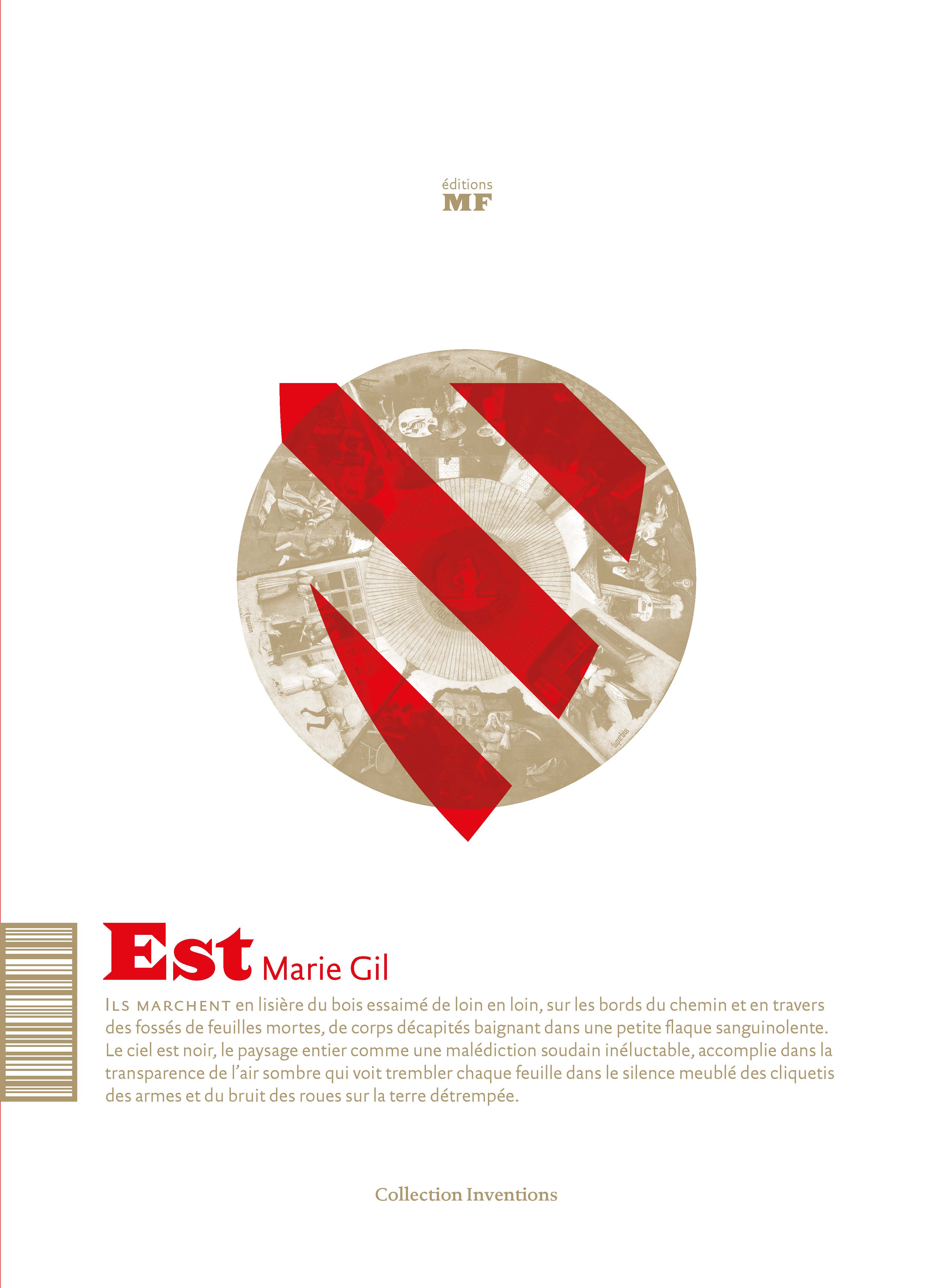
Marie Gil
EstEast120 pages. 2015. World rights available
Inventions (MF)
FICTION
LITTERATURE
Réécriture contemporaine de la quête du Graal, Est nous plonge dans la vie d’un Lancelot d’aujourd’hui.
Le monde se délite, le monde arthurien en particulier. Lancelot, accusé d’être responsable de cette déréliction, est blessé à mort dans un tournoi ; il finira ses jours sur un lit de campagne, dans une petite maison des bois.
Suite de variations sur la vie de Lancelot du lac, Est est aussi un fascinant exercice d’écriture. Du « il » au « je » en passant par le « tu », chaque partie de ce récit fragmentaire nous rapproche du héros égaré. Combats et quête posent le décor impossible à situer de cette version désenchantée du mythe dont la force est de nous plonger peu à peu dans l’intimité mélancolique d’un Lancelot devenu le narrateur de son histoire : le journal de ses dernières heures rythme toute la fin du livre.
Est est bien une version du mythe, et non son adaptation contemporaine. Un récit légendaire dans un monde qui ne croit plus aux légendes. La quête est vaine, le Graal n’est qu’un objet dont on peut retracer l’histoire, mais Lancelot ne fut jamais aussi vrai que dans cette immobilité acceptée comme un destin.
Marie Gil est essayiste, romancière et spécialiste de la littérature française du XXe siècle, elle est actuellement et co-directrice de l’équipe “Barthes” à l’ITEM/CNRS. Elle s’est faite connaître pour l’originalité de sa position sur la question biographique, qu’elle a appliquée à une biographie de Roland Barthes (Au lieu de la vie, Flammarion, 2012) et pour ses lectures des textes littéraires en anagrammes. Elle enseigne depuis 2016 la culture générale en classes préparatoires à Paris.
A contemporary retelling of the Grail quest, Est plunges us into the life of a modern-day Lancelot.
The world is falling apart, the Arthurian world in particular. Lancelot, accused of being responsible for this decline, is mortally wounded in a tournament; he will end his days on a country bed, in a small house in the woods.
A series of variations on the life of Lancelot du lac, Est is also a fascinating exercise in writing. From "he" to "I" to "you", each part of this fragmentary tale brings us closer to the lost hero. Fighting and searching set the impossible-to-situate scene for this disenchanted version of the myth, whose strength lies in the fact that it gradually plunges us into the melancholy intimacy of a Lancelot who has become the narrator of his own story: the diary of his last hours punctuates the entire end of the book.
Est is a version of the myth, not a contemporary adaptation. A legendary tale in a world that no longer believes in legends. The quest is in vain, the Grail is no more than an object whose history can be retraced, but Lancelot was never more real than in this immobility accepted as destiny.
Marie Gil is an essayist, novelist, and specialist in twentieth-century French literature. She is currently co-director of the "Barthes" team at ITEM/CNRS. She has made a name for herself for the originality of her position on the biographical question, which she applied to a biography of Roland Barthes (Au lieu de la vie, Flammarion, 2012) and for her readings of literary texts in anagrams. She has been teaching general culture in preparatory classes in Paris since 2016.