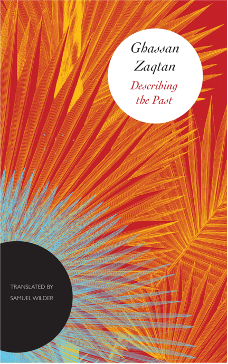
Ghassan Zaqtan
Décrire le passéDescribing the Past80 pages | 13 - 800 words. Originally published in Arabic in 1995. Published in English translation in 2016. Sold in French (Editions M.E.O - 2023). All other language rights available
The Arab List
FICTION
À l'âge de sept ans, le poète palestinien Ghassan Zaqtan s'est installé avec sa famille dans le camp de réfugiés de Karameh, à l'est du Jourdain. Ce camp, centre de la résistance palestinienne après la guerre des six jours et site d'une dévastation majeure lorsqu'Israël a rasé le camp après la bataille de Karameh en 1968, est le cadre de cette novella. C'est une histoire de passage à l'âge adulte, une histoire de jeunesse au milieu de la mort et du chaos de la guerre et de la violence. C'est une élégie pour la perte d'un ami d'enfance, et pour l'enfance elle-même, ramenée à la vie ici comme si les rêves et les souvenirs avaient fusionné dans un nouvel état d'être, une conscience altérée et une façon d'être dans le monde et de s'en souvenir.
Ghassan Zaqtan est un poète, romancier et éditeur palestinien, né près de Bethléem et ayant vécu en Jordanie, en Syrie, au Liban et en Tunisie. Il est l'auteur de nombreux recueils de poésie, de plusieurs romans et d'une pièce de théâtre, The Narrow Sea, qui a été primée au festival du Caire en 1994. Son recueil de vers Like a Straw Bird It Follows Me, traduit par Fady Joudah, a reçu le Griffin Poetry Prize en 2013. Zaqtan a été nominé pour le prix international de littérature Neustadt en 2014 et 2016. Son nom est apparu pour la première fois en 2013 parmi les favoris pour le prix Nobel de littérature.
When he was seven years old, Palestinian poet Ghassan Zaqtan moved with his family to a Karameh refugee camp east of the River Jordan. That camp—a centre of Palestinian resistance following the Six-Day War and the site of major devastation when Israel razed the camp following the Battle of Karameh in 1968—is the setting for Zaqtan’s first prose work to appear in English, Describing the Past. This novella is a coming-of-age story, a tale of youth set amid the death and chaos of war and violence. It is an elegy for the loss of a childhood friend, and for childhood itself, brought back to life here as if dreams and memories have merged into a new state of being, an altered consciousness and way of being in and remembering the world.
Ghassan Zaqtan is a Palestinian poet, novelist, and editor, who was born near Bethlehem and has lived in Jordan, Syria, Lebanon and Tunisia. He is the author of numerous collections of poetry, several novels and a play, The Narrow Sea, which was honoured at the 1994 Cairo Festival. His verse collection Like a Straw Bird It Follows Me, translated by Fady Joudah, was awarded the Griffin Poetry Prize for 2013. Zaqtan was nominated for the Neustadt International Prize for Literature in both 2014 and 2016. His name appeared for the first time in 2013 among the favourites to win the Nobel Prize in Literature.
PDF of English translation available
‘To call the novella haunting would be insufficient. The prose has a rare, fugitive quality: a narration that seems to envy the air, envy the breath of the other, and which knows in contrast its own confinement. […] In Wilder’s English, Zaqtan’s images are vital and distinctively restless; the prose has a bold simplicity that never settles into familiarity.’—Full Stop
‘The overall experience of reading this novella is one of a taut, perfect object, beautifully crafted (and translated by Samuel Wilder). Little is clear and there are few answers, but the ultimate impression is one of controlled gorgeousness. […] Seeing Zaqtan’s novella emerging from this vibrant publishing house, and in such distinctive and elegant form, is an optimistic act of decolonization from a book trade cantered on the UK and US. If Seagull’s vigorous list of Arab authors is indicative, there should be plenty more to come.’—Electronic Intifada