Myriam Tadessé
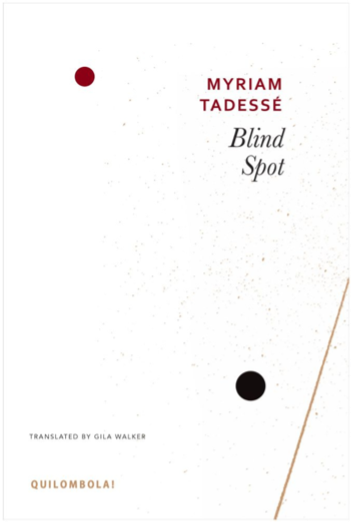
Point aveugleBlind Spot122 pages | 33 - 200 words. Published in English translation in 2021. All other language rights available - including original French.
Quilombola!
NON-FICTION
SOCIOLOGY/SOCIETY
ESSAY
Dans Point aveugle, Myriam Tadessé expose la difficulté, voire l'impossibilité, pour la France de vraiment comprendre et célébrer les réalités vécues par les citoyens français métis. Ce que cache le mot métis, c'est la place centrale qu'occupe la notion de race dans une société qui prétend la rejeter. Le monde du cinéma et du théâtre français, dans lequel Tadessé a fait carrière, semble incapable de se confronter à l'individualité des interprètes. Ils sont tenus de correspondre à des catégories - souvent basées sur la race - qui ne permettent pas les identités biraciales. Cette classification contredit non seulement les idéaux affirmés de la France, mais considère également comme des anomalies ceux qui défient les hypothèses ethno-raciales.
S'appuyant sur son expérience personnelle de femme biraciale franco-éthiopienne et sur l'histoire de sa famille, Myriam Tadessé explore les réalités de la vie des personnes métissées en France à travers ce récit franc et passioné.
Myriam Tadessé est née en 1965 à Addis-Abeba et vit à Paris depuis 1978. Elle a étudié le théâtre, la philosophie, la danse, la musique et les arts martiaux internes. Comédienne et metteur en scène, elle a enseigné le théâtre et la danse à des enfants et des adultes qui n'y avaient pas accès, écrit et réalisé des documentaires, et publié un récit L'instant d'un regard (2009).
In Blind Spot, Myriam Tadessé exposes the difficulty, even the impossibility, for France to truly understand and celebrate the lived realities of mixed or biracial French citizens. What the French word métis—which translates to ‘half-breed’ or ‘mixed-race’—hides is how central the notion of race actually is in a society that claims to repudiate it. The French film and theatre world, in which Tadessé has made her career, appears unable to confront the individuality of the performers. They are required to correspond to categories—often based on race—that don’t allow for biracial identities. This classification not only contradicts France’s asserted ideals but also views as anomalies those who defy ethno-racial assumptions.
Drawing on her personal experiences as a biracial Ethiopian-French woman and her family history, Tadessé explores the realities of life for mixed-race individuals in France through her searing and honest memoir.
Myriam Tadessé was born in 1965 in Addis Ababa, and has lived in Paris since 1978. She studied theatre, philosophy, dance, music, and internal martial arts. An actress and stage director, she taught theatre and dance to children and adults who did not have access to it, wrote and directed documentaries, and published a narrative L’instant d’un regard (2009).
‘Brief in page count but expansive in scope, it is a commanding missive from a country whose failures to account for systemic inequality resonate uncomfortably with America’s current quagmires.’—Chicago Review of Books
‘Myriam Tadessé’s memoir combines formal innovation with a candid look back on her life and the harrowing experiences she’s had with discrimination in her chosen field—and in French society as a whole. Blind Spot feels like a distillation of its author’s life, and a powerful testament to her day-to-day reality.’—Words Without Borders
‘With damning acuity, Blind Spot exposes the cracks in the rose-tinted promise of French égalité, and reveals the darker underside of a country that, for all its Belle reputation, remains in thrall to the racial fixations of its colonial past.’—European Literature Network