
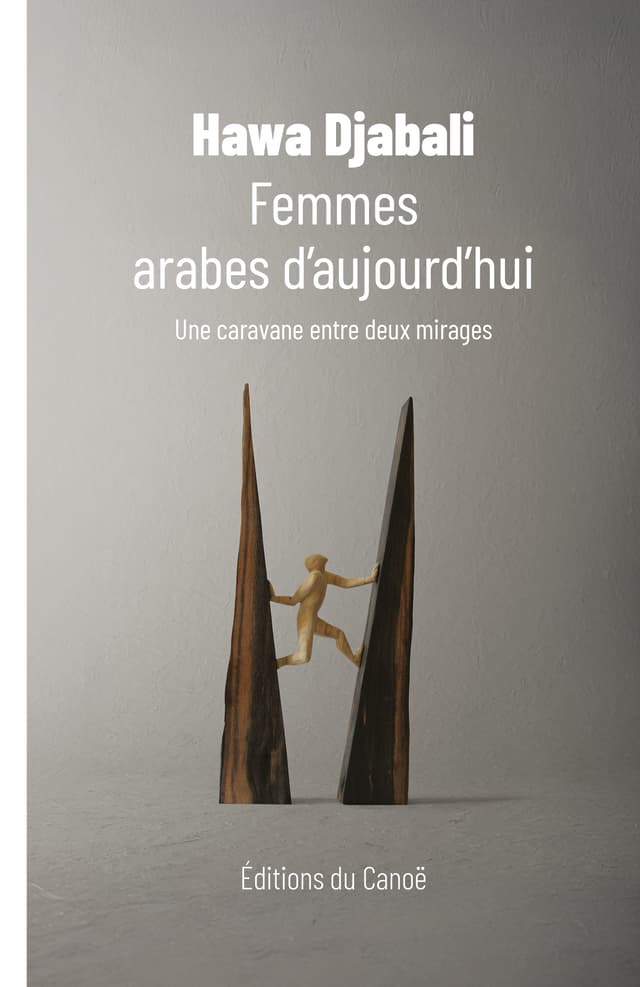
Hawa Djabali
Femmes arabes d'aujourd'huiUne caravane entre deux miragesArab Women TodayA Caravan Between Two Mirages320 pages. March 2026. World rights available
NON-FICTION
GENDER STUDIES - FEMINISM - LGBTQ+
AFRICA-MIDDLE EAST
ESSAY
Hawa Djabali s’efforce depuis des années à trouver un chemin vers une pensée féminine à part entière, persuadée qu’une véritable émancipation des femmes ne réside pas dans une ressemblance aux hommes mais dans une profonde transformation des valeurs qui structurent notre monde.
Dans cet essai passionnant qui déconstruit les progrès apparents, elle remonte le fil de la prise du pouvoir patriarcal. Comment dans l’évolution de l’humanité, cette dernière a voulu rompre avec son animalité, son appartenance aux mammifères, et ce faisant asservir les femmes qui leur rappelaient ces origines ; elle revient sur le renversement de la culture de la grande déesse (la nature) qui cède le pas au patriarcat. Elle met en lumière les liens insidieux entre pouvoir religieux, autorité masculine et domination sociale qui sont criants dans toutes les religions – ce qui est écrit dans les différents textes religieux, qu’ils soient juifs, chrétiens, musulmans concernant les femmes se passe de commentaires tant le mépris des femmes y est affirmé. Tressé fil après fil, le livre interroge la verticalité du pouvoir, les illusions d’équité et la dissimulation des savoirs féminins. Elle appelle à une réappropriation des récits fondateurs à travers une pensée féminine libre, consciente et subversive. Elle revient sur les malentendus entre l’Orient et l’Occident sur la question du voile dont elle rappelle l’origine et les significations hier et aujourd’hui. Elle s’interroge sur les obstacles auxquels se heurtent les femmes actuellement et quelle forme pourrait prendre un féminisme arabe.
Née en France en 1949, Hawa Djabali retourne à douze ans en Algérie. Elle y fait des études théâtrales puis travaille à la radio algérienne. Elle s’exile en Belgique, à Bruxelles, où elle fonde avec un Irakien, Ali Kheder, un centre culturel arabe laïque où elle reçoit artistes et écrivains du monde arabe, anime des débats, monte des pièces de théâtre. Elle-même écrit romans et contes. Elle a notamment publié Noirs jasmins (Éditions de La Différence, 2013).
For years, Hawa Djabali has sought a path toward a fully realized feminine mode of thought, convinced that true emancipation for women does not lie in resembling men, but in a profound transformation of the values that structure our world.
In this compelling essay, which dismantles the illusion of apparent progress, she traces the rise of patriarchal power. She examines how, in the course of human evolution, humanity sought to break with its animal nature—its belonging to the mammalian world—and, in doing so, subjugated women, who were seen as reminders of those origins. She revisits the overthrow of the culture of the Great Goddess (nature), which gave way to patriarchy.
She brings to light the insidious links between religious power, male authority, and social domination—links that are striking across all religions. What is written in the various religious texts- Jewish, Christian, and Muslim - concerning women speaks for itself, so explicit is the contempt often expressed toward them. Thread by thread, the book questions the verticality of power, the illusions of fairness, and the concealment of women’s knowledge.
She calls for a reclaiming of foundational narratives through a free, conscious, and subversive feminine thought. She also revisits misunderstandings between East and West regarding the veil, recalling its origins and meanings, past and present. Finally, she reflects on the obstacles women face today and on what form an Arab feminism might take.
Born in France in 1949, Hawa Djabali returned to Algeria at the age of twelve. There, she studied theater before working for Algerian radio. She later went into exile in Belgium, in Brussels, where, together with an Iraqi, Ali Kheder, she founded a secular Arab cultural center. There she welcomed artists and writers from across the Arab world, led debates, and staged theatrical productions. She herself writes novels and short stories. Among her publications is Noirs jasmins (Éditions de La Différence, 2013).